When to Change a Strategy and When to Leave It Alone

The hardest question in running a fixed setup is not what to do when it fails. It is telling the difference between failing and losing, which look identical from close range and require completely opposite responses. Get it wrong in one direction and you keep something that has stopped working. Get it wrong in the other and you abandon something that was working, at the point where it was hardest to hold.
What a Change Actually Costs
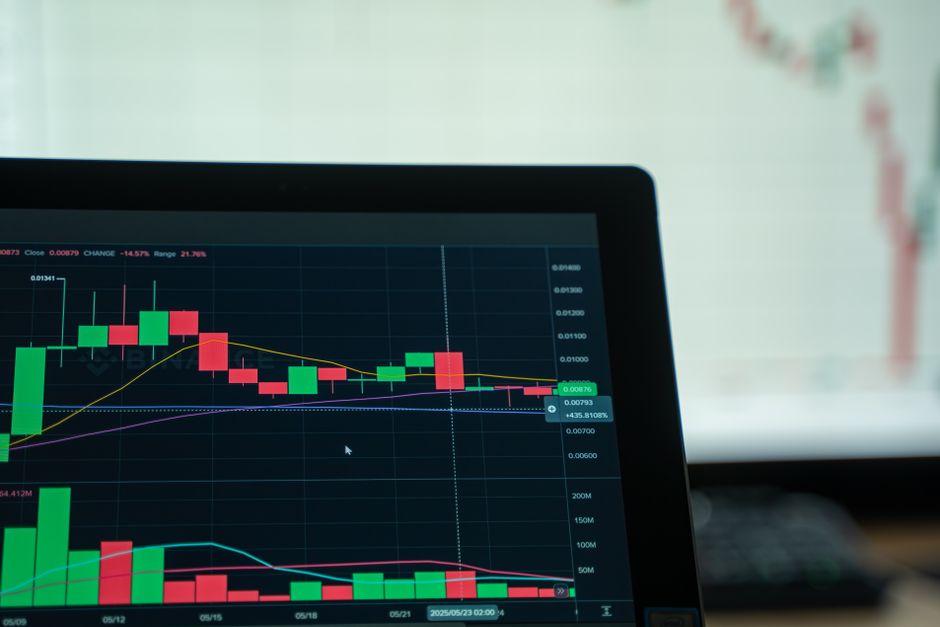
The obvious cost of an adjustment is that it might be wrong. The larger and quieter cost is that it resets the record. Every session logged under the previous version describes a strategy that no longer exists, and the new version starts with nothing behind it.
Someone who adjusts something every few weeks is running a sequence of strategies, none of which has been observed long enough to say anything about. The feeling is one of continuous improvement. The reality is that no version ever reaches the point where its results could be distinguished from chance, so improvement is being asserted rather than measured.
Reasons That Justify Changing

There is a category of change that does not require any performance evidence at all, which is the correction of something that was simply wrong. A rule that turns out to be ambiguous in a situation nobody anticipated, a definition that produces different answers depending on how it is read, a step that cannot be executed reliably in the time available. These are defects, and defects get fixed regardless of whether the recent record is good or bad.
A second legitimate reason is a change in the conditions the rule depends on. If a setup was built around an instrument behaving a certain way and it has plainly stopped behaving that way, the rule is now aimed at something that is not there. That is a genuine structural argument and it can be made without reference to profit or loss, which is exactly what makes it trustworthy.
Reasons That Do Not
The most common reason for a change is a recent bad stretch, and it is the weakest. Losing runs happen to strategies with real edges, they happen more often and last longer than intuition allows for, and they feel like evidence because they are vivid and immediate.
Close behind it is the change made because a different approach has recently been performing better. Comparing a strategy in a poor stretch with an alternative in a good one is a comparison between two temporary states, and switching between them systematically means always arriving after the good stretch has finished.
The Test Worth Applying
A useful check is whether the proposed change could have been argued for before the recent results were known. If the reasoning stands on its own, referring to the mechanics of the setup or to a change in what is being traded, it is probably sound. If the reasoning requires the recent record to make sense, it is a response to discomfort wearing the clothes of analysis.
A second check is whether the change would have helped in the specific sessions that prompted it, and whether it would have hurt in earlier sessions that went well. Most adjustments made after a bad stretch are aimed precisely at the trades that just lost, which means they are fitted to a handful of recent events and would have removed unrelated good trades from the history.
Leaving It Alone Is a Decision
Doing nothing does not feel like a choice, which is why it gets no credit and takes more discipline than it should. A stretch endured without alteration is what produces a record long enough to be worth reading, and that record is the only thing that will ever settle the question properly.
There is a middle option that is often more honest than either extreme. Reducing size while continuing to follow the rule keeps the sample accumulating and lowers the cost of being wrong, without changing the strategy at all. It does not resolve anything, and it buys time for the evidence to arrive, which is usually what is actually needed.